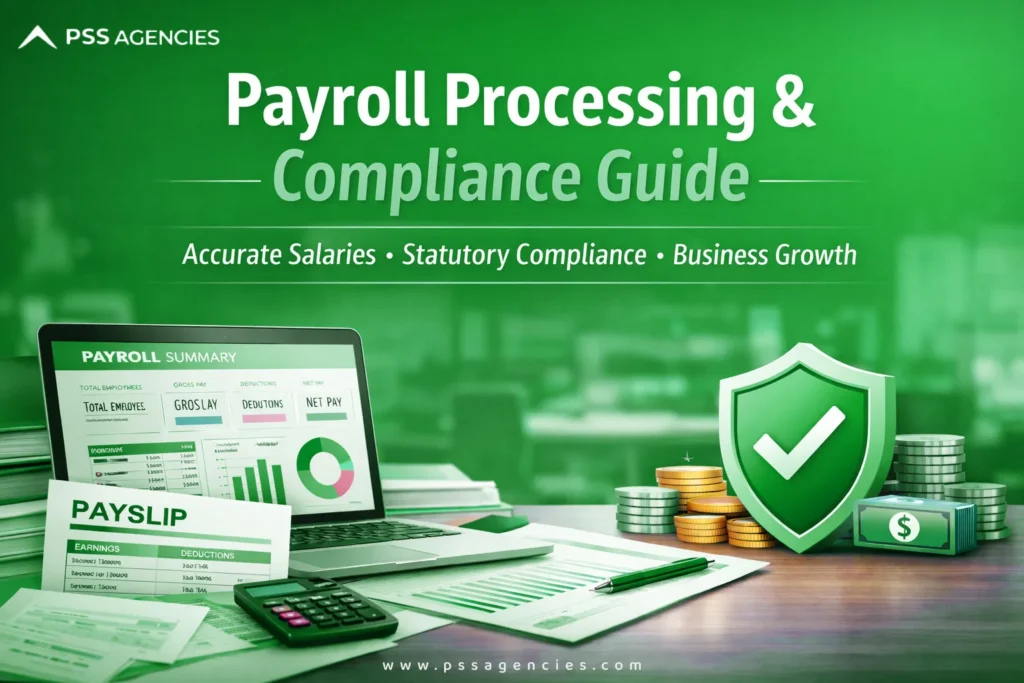
Payroll Processing & Compliance is one of the most essential operational functions in any organization. It ensures employees are paid accurately while businesses remain compliant with tax laws and statutory regulations. A properly managed payroll system not only prevents penalties but also builds employee trust and strengthens financial transparency.
Companies today must treat payroll as a strategic function rather than just an administrative task. With changing labor laws, tax structures, and reporting requirements, maintaining compliance is more important than ever.
What is Payroll Processing?
Payroll processing refers to the systematic method of calculating employee salaries, deducting taxes, and distributing net pay. It includes collecting employee data, calculating earnings, applying deductions, and filing statutory reports.
A complete payroll process involves:
- Salary calculation
- Tax deductions
- Benefits adjustments
- Payslip generation
- Compliance reporting
Payroll processing connects finance, HR, and legal compliance into one integrated system.
What is Payroll Compliance?
Payroll compliance refers to following all government rules, labor laws, and tax regulations related to employee compensation. Businesses must ensure accurate deductions, timely payments, and proper filing of statutory returns.
Payroll compliance requirements include:
- Income tax deductions (TDS)
- Provident Fund contributions
- ESI payments
- Professional tax
- Minimum wage compliance
- Labour law adherence
- Salary register maintenance
Failure to comply can lead to heavy fines, legal action, and audits.
Importance of Payroll Processing & Compliance
A well-structured payroll system provides multiple business benefits:
1. Legal Protection
Ensures compliance with labor and tax laws.
2. Employee Satisfaction
Timely and accurate salaries build trust.
3. Financial Accuracy
Prevents calculation errors and fraud risks.
4. Audit Readiness
Maintains records required during audits.
5. Business Reputation
Compliance strengthens company credibility.
Step-by-Step Payroll Process
A standard payroll workflow includes:
- Collect employee information
- Record attendance and leave data
- Calculate gross salary
- Apply deductions
- Compute net salary
- Verify payroll data
- Transfer salary payments
- Generate payslips
- File statutory returns
- Maintain payroll records
Following these steps ensures accuracy and compliance.
Key Components of Payroll System
A professional payroll management system contains:
Employee Database – personal and salary information
Attendance Tracking – leaves and working hours
Salary Structure – allowances, bonuses, incentives
Deductions Module – tax, PF, ESI, loans
Compliance Engine – statutory filing automation
Reporting System – salary reports, tax reports
Common Payroll Compliance Challenges
Many businesses struggle with payroll due to:
- Changing tax rules
- Manual calculation mistakes
- Missing deadlines
- Incomplete employee records
- Complex compliance regulations
- Lack of expertise
Manual payroll systems increase the risk of errors and penalties.
Manual vs Automated Payroll
| Manual Payroll | Automated Payroll |
| Time consuming | Fast processing |
| High error risk | Accurate |
| Compliance risk | Auto updates |
| Hard reporting | Instant reports |
| Limited scalability | Scalable |
Automated payroll software significantly reduces compliance risks and improves efficiency.
Benefits of Payroll Outsourcing
Outsourcing payroll processing & compliance is becoming popular because it:
- Saves administrative time
- Ensures legal compliance
- Reduces operational costs
- Improves accuracy
- Provides expert guidance
- Minimizes risk of penalties
It is especially beneficial for startups, SMEs, and growing companies.
Payroll Compliance Calendar
Businesses must track filing deadlines carefully.
Monthly
- PF payment
- ESI payment
- TDS payment
Quarterly
- TDS returns filing
Yearly
- Form 16 issuance
- Annual tax filing
- Payroll reconciliation
Maintaining a compliance calendar prevents late fees and legal notices.
Best Practices for Payroll Processing
To maintain efficient payroll management:
✔ Use payroll software or professional services
✔ Keep employee records updated
✔ Stay informed about tax changes
✔ Conduct periodic payroll audits
✔ Maintain secure data storage
✔ Verify payroll before salary release
Future of Payroll Management
Modern payroll systems are evolving with technology. AI-powered payroll tools, cloud systems, and automated compliance tracking are transforming payroll operations. Businesses adopting digital payroll solutions gain higher accuracy, better reporting, and improved compliance management.
Conclusion
Payroll Processing & Compliance is not just about paying salaries — it is about ensuring accuracy, legality, and efficiency in employee compensation. Businesses that invest in professional payroll systems or outsource payroll services can reduce risk, improve employee satisfaction, and maintain compliance with changing regulations.
A strong payroll system supports organizational growth, financial discipline, and long-term success.